


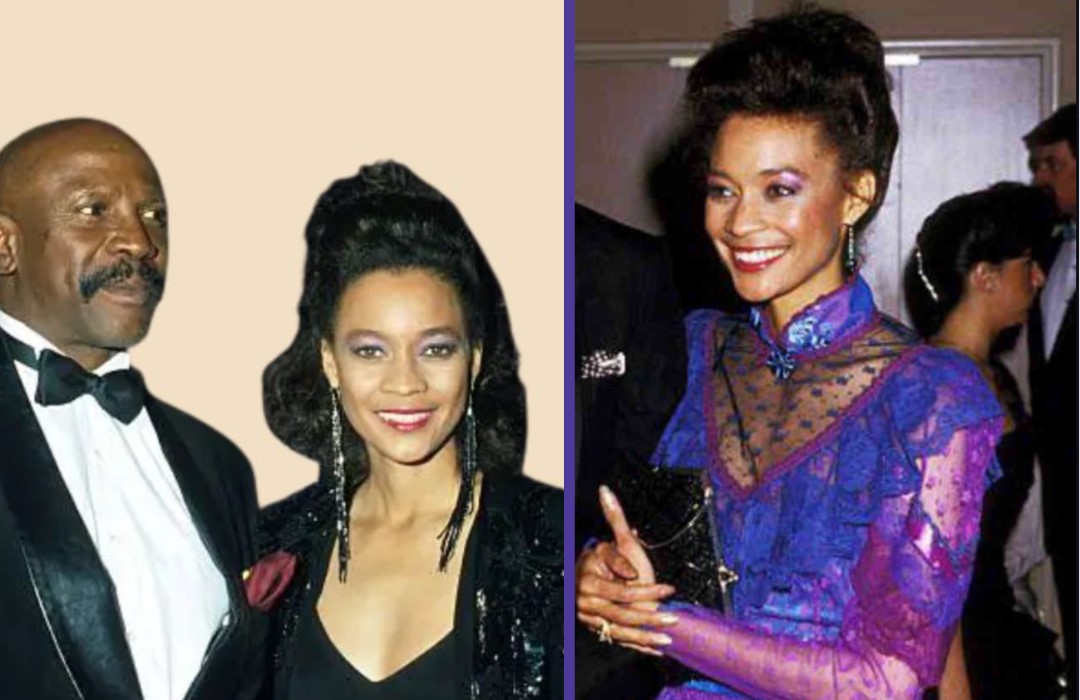
In a culture that relentlessly monetizes celebrity connections, Hattie Glascoe stands apart as a genuinely rare figure — a woman who touched the orbit of Hollywood fame and deliberately chose to walk away from it. Her name surfaces in articles about the late, legendary Louis Gossett Jr., but Hattie is far more than a footnote in someone else’s story. She is a study in autonomy, dignity, and the quiet power of living on your own terms.
This article presents everything that is publicly and verifiably known about Hattie Glascoe — her brief marriage to Louis Gossett Jr., the circumstances surrounding its annulment, and the private life she built after the spotlight faded.
Who Is Hattie Glascoe?
Hattie Glascoe is an African-American woman best known as the first wife of Academy Award-winning actor Louis Gossett Jr. Their marriage in August 1964 lasted only a matter of months before being annulled in early 1965, yet it remains a meaningful chapter in Gossett’s personal history — and in Glascoe’s own story.
Beyond her connection to Gossett, very little biographical detail is publicly available about Hattie Glascoe. She has never given a recorded interview, never appeared at public events in connection with her former husband, and has not sought media attention of any kind. Her birth date, hometown, educational background, and later life are not part of the public record, and that appears to be entirely by design.
It is worth noting that some online sources have confused Hattie Glascoe with a younger social media personality of the same name. These are two entirely different individuals. The Hattie Glascoe discussed in this article is the woman who married Louis Gossett Jr. in New York in 1964.
Early Life and Background
Hattie Glascoe grew up in mid-twentieth-century America, a period of profound social upheaval for African-American communities. The civil rights movement was gathering force throughout the early 1960s, reshaping laws, institutions, and daily life across the United States. Growing up as a Black woman in this era meant navigating racial discrimination and limited opportunity with resilience and determination.
No verified details exist regarding Hattie Glascoe’s family of origin, her place of birth, or her education. Based on the timing of her marriage — August 1964 — historians and researchers estimate she was likely in her twenties at the time, placing her birth somewhere in the early-to-mid 1940s. However, this remains an estimation rather than confirmed fact, and any source claiming a specific birth year should be treated with caution.
What is known is that Hattie likely crossed paths with Louis Gossett Jr. in New York City during the early 1960s, when he was performing on Broadway and building his reputation as a serious theatrical actor.
Meeting Louis Gossett Jr.
Louis Cameron Gossett Jr. was born on May 27, 1936, in Brooklyn, New York. By the early 1960s, he had already made his mark on Broadway, appearing in critically acclaimed productions including A Raisin in the Sun (1959), The Blacks (1961), and Tambourines to Glory (1963). He was a young man of intense ambition and formidable talent, working in an industry that was only just beginning — reluctantly — to make space for Black performers.
It is believed that Hattie and Louis met somewhere around 1963 in New York City. According to records reported in Jet magazine at the time, the couple dated for approximately a year and a half before deciding to marry. Their relationship developed during a time when Gossett was still establishing himself professionally, and their courtship appears to have been genuine and hopeful.
The Marriage: August 1964
Hattie Glascoe and Louis Gossett Jr. were married in August 1964 at the Church of the Apostles in New York City. The ceremony was officiated by Reverend Robert Griswold and attended by family and close friends. Louis was 24 years old at the time of their wedding.
By all accounts, the marriage began with optimism. Both were young, and Gossett was on the cusp of what would become one of Hollywood’s most celebrated careers. The couple appeared, to those who knew them, to be embarking on a meaningful shared life.
However, the marriage encountered serious difficulties almost immediately. Within approximately five months of the wedding, the relationship had broken down to the point that both parties sought a legal annulment rather than a divorce.
The Annulment: What We Know — and What We Don’t
An annulment differs from a divorce in an important legal sense: it declares that the marriage was not valid from its inception, rather than simply dissolving a valid union. The reasons for seeking an annulment rather than a divorce can include fraud, misrepresentation, or other specific legal grounds that vary by jurisdiction.
Neither party gave any recorded interview in which they discussed the breakdown of the relationship. No court documents detailing the cause have entered the public record, and no friends or family members have spoken on the matter.
Life After the Annulment
Following the annulment, Hattie Glascoe made a choice that, in the context of celebrity culture, is almost radical: she disappeared entirely from public life.
She did not remarry. She did not pursue a career in entertainment or leverage her connection to Gossett to gain media access She gave no interviews She wrote no memoir She did not appear at award ceremonies or Hollywood events. In the decades that followed — as Louis Gossett Jr. became a major star, winning an Emmy for Roots in 1977 and an Academy Award for An Officer and a Gentleman in 1983 — Hattie remained entirely absent from public discourse.
This is genuinely unusual. Celebrity adjacency has launched countless careers and generated enormous media attention for people with far less direct connections than a legal marriage. Hattie Glascoe had every opportunity to exploit her former marriage for attention, income, or relevance. She declined to do so, entirely and consistently, for the rest of the public record.
Louis Gossett Jr.: The Path He Chose
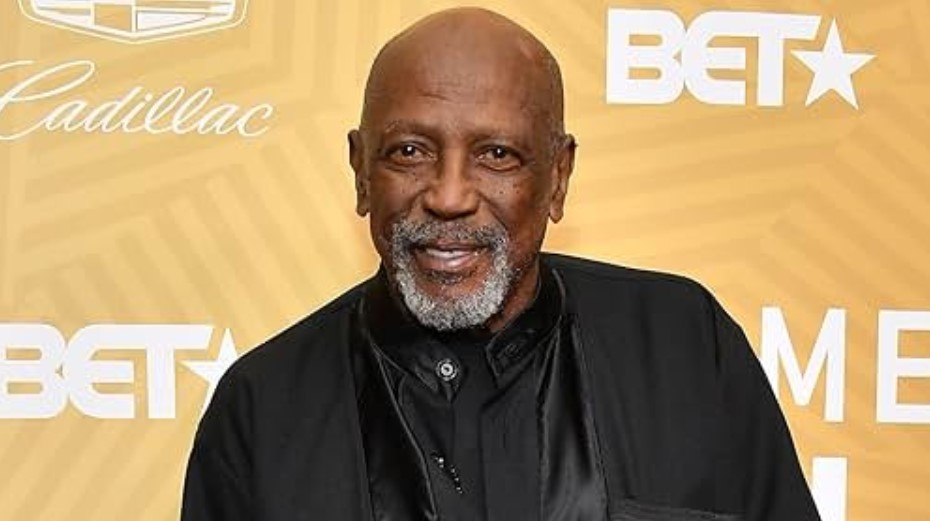
After the annulment, Gossett continued his ascent through theater, television, and film. He married twice more: to Christina Mangosing in 1973 (they divorced in 1975), and to singer Cyndi James-Reese on Christmas Day, 1987 (they divorced in 1992). He fathered one biological son, Satie, and adopted another, Sharron.
In 1983, Gossett made history by becoming the first African-American actor to win the Academy Award for Best Supporting Actor, recognized for his commanding portrayal of Gunnery Sergeant Emil Foley in An Officer and a Gentleman. He was also only the third African-American performer ever to win an acting Oscar at the time of his win.
Louis Gossett Jr. passed away on March 29, 2024, at the age of 87. His death prompted renewed interest in every chapter of his personal life — including his first, brief marriage to Hattie Glascoe.
Why People Search for Hattie Glascoe
The renewed public curiosity around Hattie Glascoe is understandable. Following Louis Gossett Jr.’s death in 2024, audiences and fans naturally sought to understand the full arc of his life, including relationships that predated his fame. Hattie Glascoe represents an enigma that runs counter to the norms of celebrity culture: a real person connected to a real star who has, nevertheless, remained genuinely unknowable.
There is also something culturally instructive about her story. In an era when privacy is increasingly difficult to maintain and increasingly rare as a choice, Hattie Glascoe exercised a kind of sovereignty over her own narrative that most people — famous or not — never fully achieve. She controlled her story by refusing to tell it publicly.
What Hattie Glascoe’s Story Teaches Us
Hattie Glascoe is not famous. She has not sought fame. Her significance lies not in achievements catalogued by entertainment press or awards recognized by industry peers, but in a choice that is, in its own way, profound.
She reminds us that proximity to celebrity is not destiny. That marriage, even a very short one, does not define a person’s entire identity. That choosing privacy is not the same as disappearing — it is, in fact, one of the most assertive decisions a person can make in a world that increasingly treats public exposure as both inevitable and desirable.
Key Facts About Hattie Glascoe
- Known for: First wife of actor Louis Gossett Jr.
- Marriage date: August 1964, Church of the Apostles, New York City
- Marriage duration: Approximately five months
- Legal outcome: Annulment finalized in early 1965
- Remarried: No confirmed record of remarriage
- Public life after annulment: None — she has lived entirely privately
- Birth date: Not publicly known; estimated early-to-mid 1940s
- Net worth: Unknown; she has no confirmed public career or financial record
Conclusion
Hattie Glascoe is, by any conventional measure, a private citizen. She is not a public figure, not a celebrity, and not someone who has sought recognition. Yet she occupies a quietly compelling place in the biography of one of Hollywood’s most important actors — and in the broader conversation about fame, privacy, and the choices people make at the margins of the spotlight. That, in itself, is a story worth telling — and worth telling accurately.