


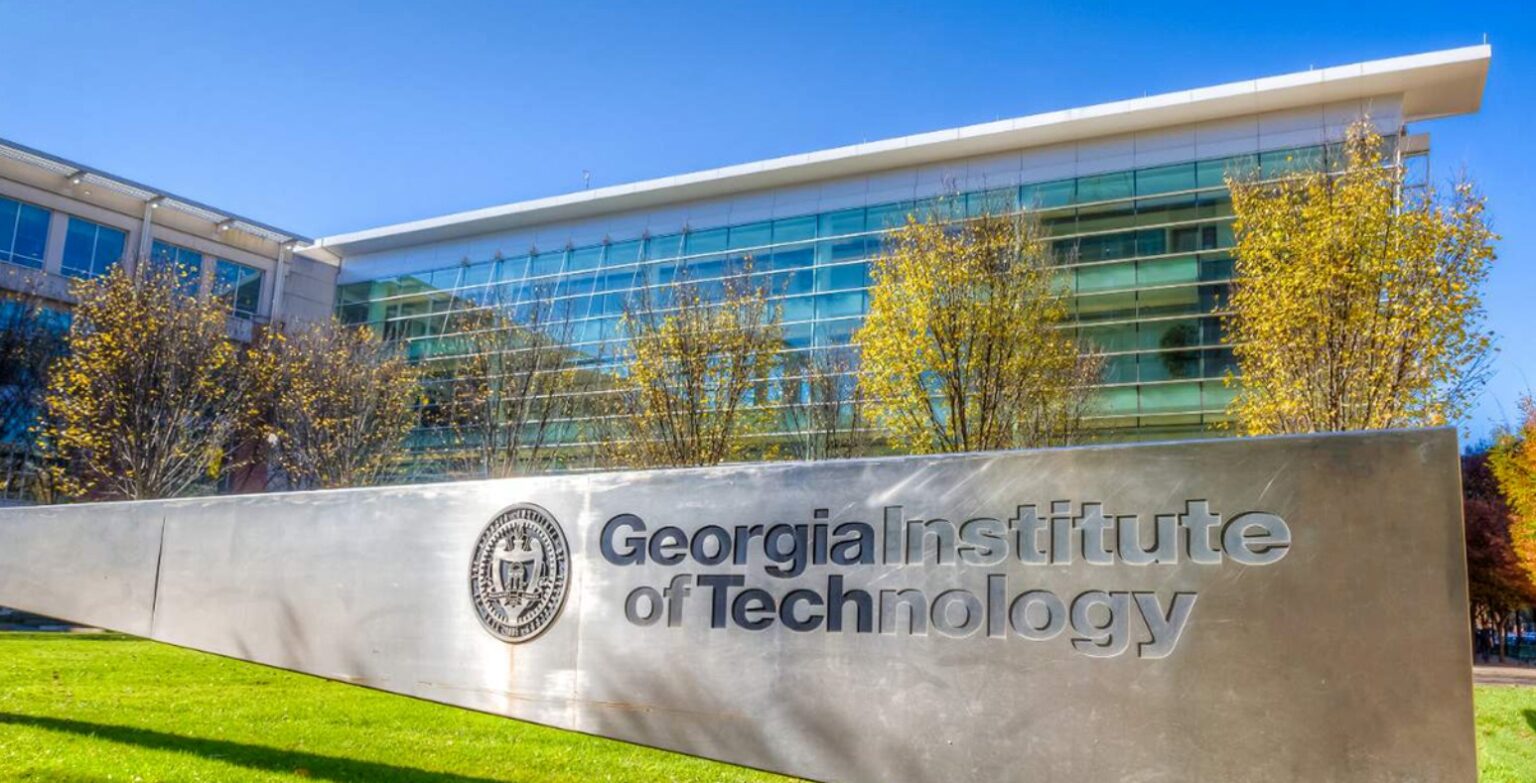
The Georgia Institute of Technology is known worldwide as Georgia Tech. It is one of the most powerful engines of innovation in higher education. This public research university sits in the heart of Atlanta, Georgia. For over 140 years, it has turned students into engineers, scientists, entrepreneurs, and leaders. Whether you are a prospective student, a parent, or a curious professional, this guide covers everything you need to know about Georgia Tech.
A Brief History: Built for Progress Since 1885
Georgia Tech was founded in 1885 with a clear mission: provide a practical, hands-on technical education. It served the workforce of a rapidly growing South. However, what started as a modest trade school has evolved into a globally recognized research powerhouse. The institute’s core motto — Progress and Service — has never wavered. Even so, its scope has expanded from mechanical arts to quantum computing, biotechnology, and space exploration.
Today, the university occupies a 400-acre, tree-lined campus in Midtown Atlanta. Atlanta is one of the fastest-growing tech corridors in the United States. Because of its location, students gain direct access to major corporations, startups, and government agencies. As a result, students do not just learn in classrooms. Instead, they step into the professional world through internships, co-ops, and collaborative research.
Academic Excellence: Rankings That Speak for Themselves
Few universities match Georgia Tech’s consistency in national and global rankings. According to U.S. News & World Report, the Georgia Institute of Technology ranks #32 among National Universities. It also holds the #3 spot for Most Innovative Schools in the country. Furthermore, its undergraduate engineering program ranks #3 in the United States. Every individual engineering program places in the top six nationally.
At the graduate level, the numbers are equally impressive. Georgia Tech’s graduate engineering programs hold top-10 positions across every discipline. For example, Industrial Engineering leads the nation at #1. Similarly, Aerospace Engineering and Biomedical Engineering each rank #2. Civil Engineering climbed to #2, tied with UC Berkeley. Computer Engineering ranks #5. In addition, Georgia Tech’s Computer Science graduate program ranks #6 overall. Artificial Intelligence also ranks #6, and Systems ranks #4, tied with Stanford University.
The Scheller College of Business has made strong progress as well. Business Analytics ranks #3 nationally. Moreover, the Part-Time MBA broke into the top 10, landing at #10 alongside Georgetown and the University of Minnesota.
Globally, Georgia Tech ranks among the finest institutions. The Times Higher Education World University Rankings places the institute #40 worldwide. Its engineering programs rank #12 globally — a remarkable result for a public university.
Colleges and Programs: Deep Expertise Across Six Colleges
Georgia Tech organizes its academic offerings into six colleges. Each one provides a strong mix of undergraduate and graduate programs.
College of Engineering — This is Georgia Tech’s flagship college. It covers aerospace, biomedical, civil, chemical, electrical, industrial, and mechanical engineering. The college employs 634 full-time faculty members. Its PhD student-to-faculty ratio is 4.5:1. Because of this, students receive close mentorship and access to advanced research.
College of Computing — This college is one of the most in-demand at Georgia Tech. It offers programs in computer science, human-computer interaction, computational science, and cybersecurity. Additionally, the college has helped Atlanta grow into a major technology hub.
Ivan Allen College of Liberal Arts — This college is often overlooked, but it is deeply important. It offers programs in economics, history, international affairs, public policy, and more. It ranks in the top 10 nationally for Information and Technology Management and Environmental Policy and Management.
Scheller College of Business — Scheller blends technology with business education. Therefore, it prepares students for careers in analytics, finance, and management within tech-driven industries.
College of Sciences — This college covers biology, chemistry, earth sciences, mathematics, physics, and psychology. It supports the institute’s research mission with foundational scientific work.
College of Design — This college brings a creative dimension to Georgia Tech. It covers architecture, industrial design, music technology, and urban planning.
One of Georgia Tech’s most celebrated programs is the Online Master of Science in Computer Science (OMSCS). This program has transformed access to elite graduate education. It runs entirely online at a fraction of the cost of traditional programs. As a result, tens of thousands of students worldwide have enrolled. It continues to influence how universities approach scalable, affordable education.
Research and Innovation: A $4.5 Billion Impact on Georgia
Georgia Tech is more than a learning institution. It is also a major economic and intellectual force. The university contributes $4.5 billion to Georgia’s economy each year. This makes it the top contributor among all 26 institutions in the University System of Georgia. Furthermore, the Georgia Tech Research Corporation ranks #19 among Top 100 Worldwide Universities Granted U.S. Utility Patents. This reflects Georgia Tech’s strong culture of applied, real-world innovation.
Georgia Tech’s newest research district is Science Square. It sits adjacent to campus and will include over 1.8 million square feet of lab and office space. It will also feature residential units, retail, and a dedicated pedestrian bridge connecting it to campus. Because of its design, Science Square will attract biotech firms, startups, and research groups that want to work near Georgia Tech’s talent.
The recently launched Space Research Institute shows another side of Georgia Tech’s ambitions. Jud Ready, a triple alumnus, serves as its first director. The institute aims to bring space innovation together across disciplines. Its long-term goal is to send a Georgia Tech student to space.
Student Life: More Than Engineering Problem Sets
Georgia Tech has a well-earned reputation for academic rigor. However, the campus experience is far richer than late nights in the lab. The university enrolls approximately 20,592 undergraduates. It also supports more than 500 student organizations and over 50 Greek organizations. Therefore, students have countless ways to connect and grow outside the classroom.
Athletics are central to campus culture. The Yellow Jackets compete in 17 NCAA Division I sports. Football, basketball, and baseball all draw passionate crowds. In addition, the university offers 20 intramural sports and 40 competitive sports clubs. So students at every skill level can stay active throughout the year.
The student-to-faculty ratio is 21:1. This keeps education personal and accessible. The student body draws talent from all 50 states and dozens of countries. As a result, Georgia Tech’s campus is a genuinely global environment. The institute also consistently ranks among the Top 50 Green Colleges by The Princeton Review. This reflects a commitment to sustainability that runs across campus operations and research.
Career Outcomes: A Return on Investment That’s Hard to Beat
One of the strongest reasons to choose Georgia Tech is what happens after graduation. According to U.S. Census Bureau data, Georgia Tech graduates out-earn peers from every other University System of Georgia institution. This holds true at one, five, and ten years after graduation. Specifically, the median salary six years after graduation stands at $89,432. That figure sits well above the national average for college graduates.
For computing and information services graduates, the numbers are even more striking. Graduates earn an average of $73,936 just one year out. By five years, that rises to $94,314. At ten years, it reaches $124,663.
Georgia Tech also ranks among the Top Public Schools in the country. It earns strong marks for Best Value as well. In-state tuition runs approximately $12,008 per year. Out-of-state students pay around $35,092. Both figures fall well below those of comparable private research universities. Consequently, Georgia Tech offers an elite education at a genuinely accessible price.
Notable Alumni: Yellow Jackets Changing the World
Georgia Tech’s alumni network shows the institution’s enduring impact. Yellow Jackets have served as astronauts, CEOs, inventors, architects, and public servants across every sector.
Alumni have played key roles in NASA’s Artemis program. They contributed to spacecraft design and astronaut operations. Moreover, Georgia Tech graduates helped build Firefly Aerospace’s Blue Ghost lunar lander. In March 2025, Blue Ghost became the first commercial lunar lander to successfully touch down on the Moon. In business and technology, Georgia Tech alumni regularly appear on major recognition lists. In fact, 14 alumni, students, and faculty appeared across nine categories in the 2025 Forbes list.
The 2025 College of Engineering Alumni Awards recognized graduates working across a wide range of fields. Their work spans Atlanta’s skyline construction, federal space commerce policy, tax software used by millions, and operations aboard the International Space Station. Because of this breadth, Georgia Tech’s reach is both global and deeply practical.
Admissions: What to Know Before You Apply
Admission to Georgia Tech is competitive. For graduate engineering programs, the acceptance rate is approximately 20.1%. The four-year graduation rate for undergraduates is 64%. This reflects the institution’s academic intensity and its strong culture of student completion.
The application fee is $95 for domestic students and $105 for international applicants. Georgia Tech accepts the Common Application. For students who qualify for financial aid, the average net price for federal loan recipients is approximately $14,588. That is a strong value given the caliber of the institution.
Why Georgia Institute of Technology Stands Apart
Many excellent universities compete for talented students. However, the Georgia Institute of Technology holds a distinct position among them. It combines the research output of a major national university with the value and accessibility of a public institution. It is deeply rooted in Atlanta, yet globally connected. It trains students not just for their first job, but for careers that define entire industries.
For students drawn to engineering, computing, business analytics, or design, Georgia Tech is more than a strong choice. For many, it is simply the right one.